
Which place in Europe is warmest in winter?
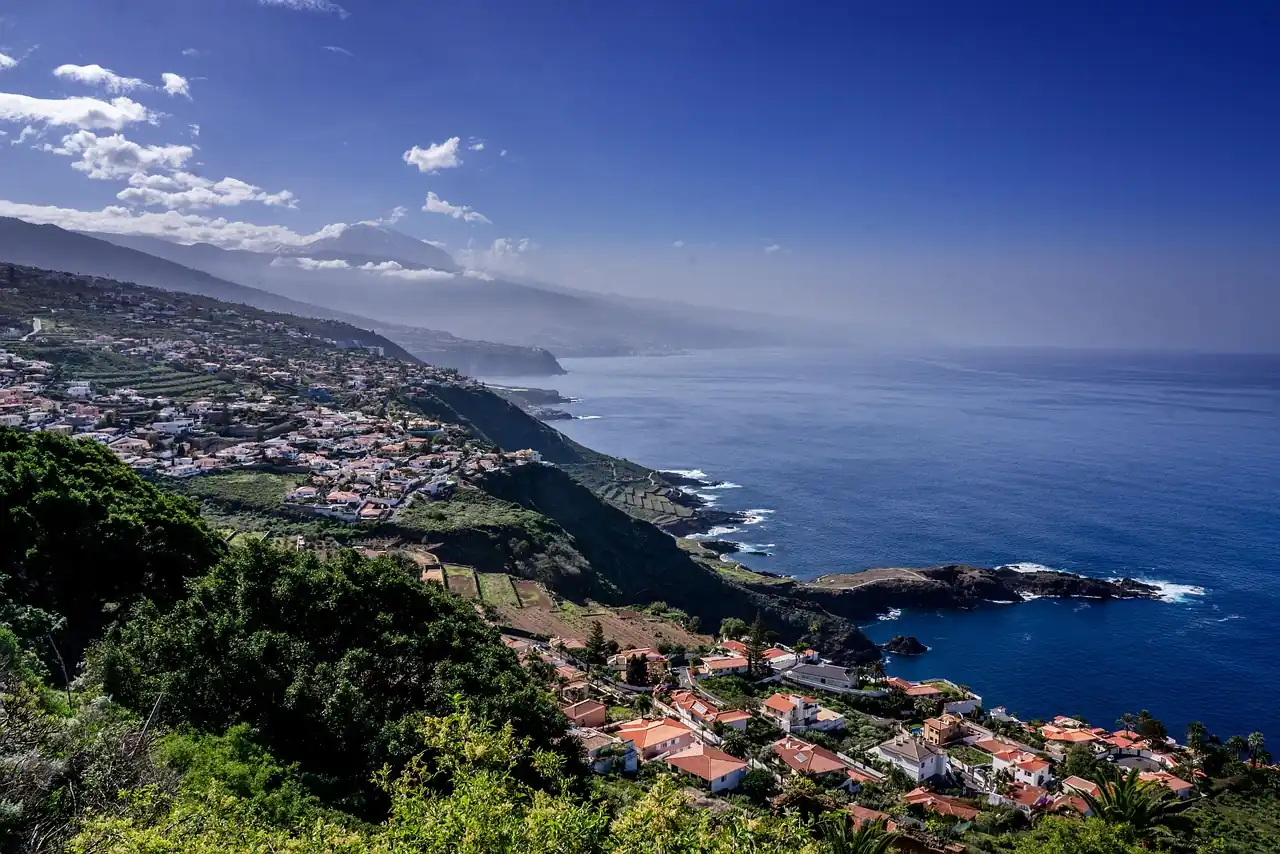
The Canary Islands, with Madeira the only place close behind. In our eleven-year data the Las Palmas point, on the north-east coast of Gran Canaria, has an average high of 21° in December and 20° in January and February, with nights that stay at 14° to 16°. The south coasts of Gran Canaria and Tenerife are more sheltered and usually run a degree or two warmer. We have no data point there, so every figure below uses Las Palmas. The Canaries are Spanish, but they sit off the coast of Africa, not on the European mainland. Only Madeira comes close, with highs of 18° to 20° and nights of 14° to 15°, about a degree below the Canaries. Every other place we track has winter highs of 18° or less and no winter low above 13°.
Here are all 14 places for January, the coldest month, warmest first. The ranking below uses the whole of December to February, but January is where the order is hardest on you:
January averages, side by side
| Place | High | Low | Rain | Rain days |
|---|---|---|---|---|
| Canary Islands | 20° | 15° | 15 mm | 6 |
| Funchal (Madeira) | 19° | 14° | 73 mm | 6 |
| Malaga | 17° | 9° | 58 mm | 5 |
| Cyprus | 16° | 9° | 90 mm | 8 |
| Seville | 16° | 6° | 54 mm | 4 |
| Valencia | 16° | 7° | 32 mm | 2 |
| Crete | 16° | 9° | 84 mm | 9 |
| Lisbon | 15° | 9° | 91 mm | 7 |
| Santorini | 15° | 11° | 64 mm | 7 |
| Barcelona | 14° | 5° | 36 mm | 3 |
| Porto | 14° | 7° | 151 mm | 11 |
| Antalya | 14° | 6° | 253 mm | 10 |
| Rome | 12° | 4° | 52 mm | 8 |
| Athens | 12° | 5° | 53 mm | 7 |
Averages 2015-2025 · Source: Open-Meteo, CHIRPS · How we measure
A few honest limits. This is Europe in winter, not Southeast Asia. The best days in the Canaries are comfortable in a T-shirt, and nowhere on the continent is swimming weather. For warm sea and 30-degree days, see where is warm in January or where is warm in December. We hold no data for Malta, the Algarve, Sicily or Gibraltar, so they are not ranked here; we would rather leave a gap than guess.
Where to be next: your month-by-month route, $19
A route for your months with a leave-by date for each stop, a backup, and the seasonal traps on your path. Drafted from 11 years of weather data, every number checked against it, in your inbox within 48 hours. Not included: visas, insurance or bookings.
Ranked: the warmest places in Europe in winter
Ranked by average daytime high across December to February, with nights and rain days beside it:
- Canary Islands (Las Palmas): highs of 20° to 21°, lows 14° to 16°, rain on 5 to 6 days a month. The only place on the list that feels like early summer on a good day. See Canary Islands in January and Canary Islands weather by month.
- Madeira: highs of 18° to 20° and the warmest nights outside the Canaries (14° to 15°). Rain on 5 to 8 days a month. See best time to visit Madeira.
- Málaga: highs of 17° to 18° and milder nights than Seville (9° to 11°). Rain on about 3 to 5 days. See Málaga weather in winter.
- Seville: highs of 16° to 18°, February the warmest, but nights as low as 6° in January. Rain on about 3 to 4 days a month.
- Cyprus: highs of 16° to 18°. December is the warmest but also the wettest, at 111 mm.
- Valencia: highs of 16° to 17° and the driest of the lot, with rain on only about 2 to 3 days a month. Nights of 7° to 8°.
- Crete: highs of 16° to 17°, with rain on about 7 to 9 days a month.
- Lisbon: highs of 15° to 16°, rain on about 5 to 7 days a month. See best time to visit Lisbon.
Santorini, Antalya, Barcelona, Porto, Rome and Athens fall below these. Antalya is on the Asian side of Turkey; we include it because winter-sun lists often do.
How much does it rain, really?
Temperature is half of winter. A mild month that rains one day in three is a different month from a cool one that rains one day in twenty. A rain day here is a day with at least two millimetres, so drizzle does not count.
The Canaries and the Spanish mainland are the dry end. The Canaries get the least rain by volume, 15 to 29 mm a month over 5 to 6 light days. Valencia and Barcelona have rain on about 2 to 5 days a month, Seville and Málaga about 3 to 5. The Atlantic coast is the wet end: Porto has rain on 9 to 13 days a month and 101 to 168 mm. Antalya, which looks warm on postcards, collects 266 mm in December and 253 mm in January, far more than any other place here. We do not hold sunshine hours, so we do not quote them. In our cloud data, Cyprus, Spain and the Canaries are the least cloudy in winter, and Madeira, Porto and Lisbon the most.
Which of these are good for working?
Our take, on weather alone:
- Canary Islands: the best all-round pick. Warm enough to work on a terrace most days, little rain, no cold evenings. The trap is wind and which side of the island you pick: Las Palmas is on the cloudier north-east side, and the south coasts are usually sunnier.
- Málaga: the best mainland base. Pleasant by day, but with January lows of 9° you still want heating in the flat.
- Seville: dry and bright, but nights drop to 6° in January and many older Spanish flats have little or no central heating. A good winter for the café, a poor one for the flat.
- Valencia and Barcelona: dry and bright with short days, but cooler. Fine for a working month, not a sun month.
- Madeira: mild nights, but the island is steep and wet in the mountains, with several times the Canaries' rain.
- Lisbon and Porto: popular with remote workers, but cool and wet in winter. Plan on indoor days and heating costs.
- Cyprus and Crete: mild, but rainy in December and January.
Short winter days apply everywhere, so even in the Canaries the working day finishes in the dark.
What are the traps?
- Confusing "mild" with "warm". Most lists call 17° warm because it is warm for Europe. It is a light-jacket day, not a beach day.
- Cold nights and flats without heating. Southern Europe is built for summer. Look at the lows, not just the highs.
- Postcard places that rain. Antalya and Porto are the clearest cases above.
- Booking the wrong month. Cyprus is driest in February, not December.
So where should you go?
- The warmest winter in Europe, with the least rain by volume: the Canary Islands.
- A mainland base with trains and Central European time: Málaga, then Seville.
- An island with steady nights: Madeira, and accept more rain than the Canaries.
- Actual beach weather: it does not exist in Europe in winter. Look at Cape Verde, Goa or the Caribbean.
How sure are these numbers?
Eleven years of weather averaged by month and stored on NomadWeather: temperatures, cloud and rain days from Open-Meteo (CC BY 4.0), monthly rainfall from CHIRPS. Each place is one data point (a city or an island's main town), so other parts of the same island or region differ. A single winter can be warmer, colder or wetter than the average.
Frequently asked questions
What is the warmest place in Europe in winter?
The Canary Islands. Our data point, Las Palmas on the north-east coast of Gran Canaria, has a high of 21°C in December and 20°C in January and February, and lows of 14°C to 16°C. Only Madeira comes close (lows of 14°C to 15°C); no other place we track in Europe has a winter low above 13°C.
What is the warmest place in mainland Europe in winter?
Southern Spain. Málaga has highs of 17°C to 18°C from December to February, and Seville reaches 18°C in February. Both have rain on only about 3 to 5 days a month. Valencia is close behind, with a 17°C high in December.
Is it warm enough to sit outside in Europe in winter?
On the best days, in the Canaries and southern Spain, yes, in daytime. Evenings are the issue: Málaga's lows are 9°C to 11°C and Seville's 6°C to 8°C, so you want a jacket after dark and a heater indoors.
Is Madeira warmer than Lisbon in winter?
Yes, clearly, by day and by night. From December to February Madeira's highs are 18°C to 20°C and its lows 14°C to 15°C; Lisbon's highs are 15°C to 16°C and its lows 9°C to 10°C. Madeira is about 4 degrees warmer by day in December and January, 2 in February, and 4 to 5 degrees warmer at night.
Where in Europe is warm and dry in winter?
Valencia and Barcelona are the driest, with rain on about 2 to 5 days a month, but they are cool: highs are 14°C to 17°C. Málaga and Seville combine mild days with only about 3 to 5 rain days a month.
Is Greece warm in winter?
Mildly. Crete has highs of 16°C to 17°C and Santorini 15°C to 16°C, and Athens only 12°C to 14°C in winter. The Greek islands also get far more rain in January than the Canaries.
Is it warm enough to swim in Europe in winter?
No. We hold no sea-temperature data, but the warmest place in Europe, the Canary Islands, has a 20°C high in winter, which is a walking and terrace day, not a swimming one. The Canaries are Spanish islands off Africa, not mainland Europe; the warmest mainland place is Málaga, at 17°C to 18°C.
Not sure where yet? Pick your months and what to avoid, and get your 3 best places → Where should I go?
Weather data: Open-Meteo (CC BY 4.0), open-meteo.com; rain totals: CHIRPS (Climate Hazards Center, UC Santa Barbara); Funchal (Madeira): Open-Meteo. Processed by NomadWeather from stored copies of the data.