
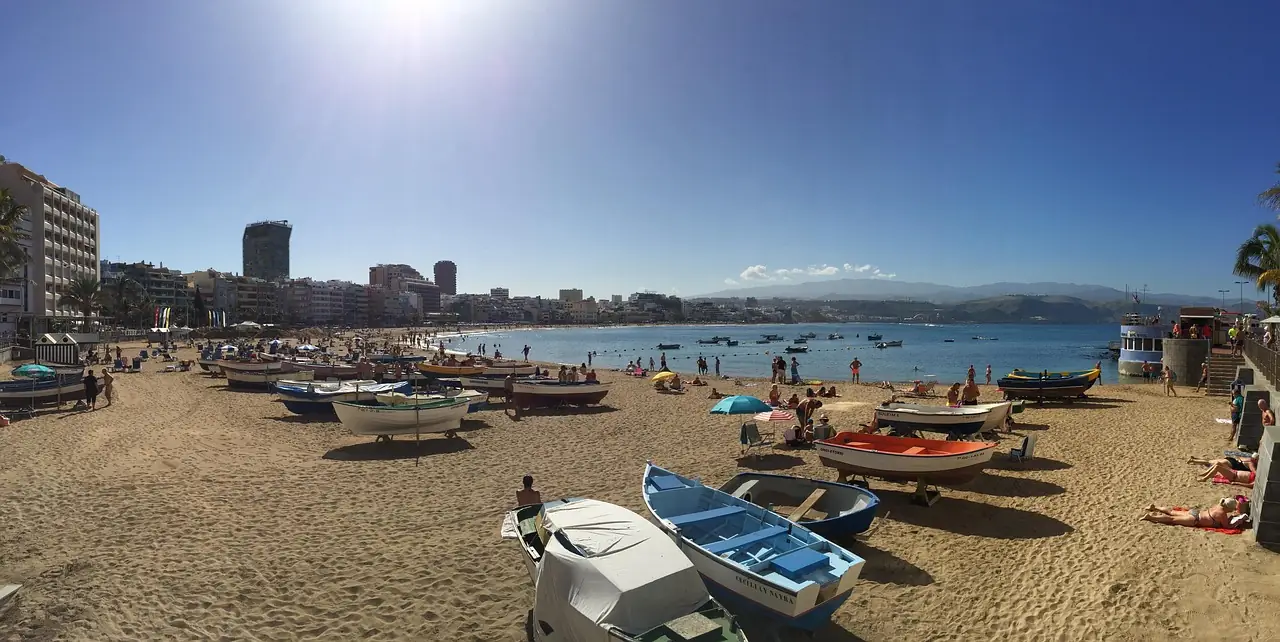
Gran Canaria: Average high and low temperature, °C
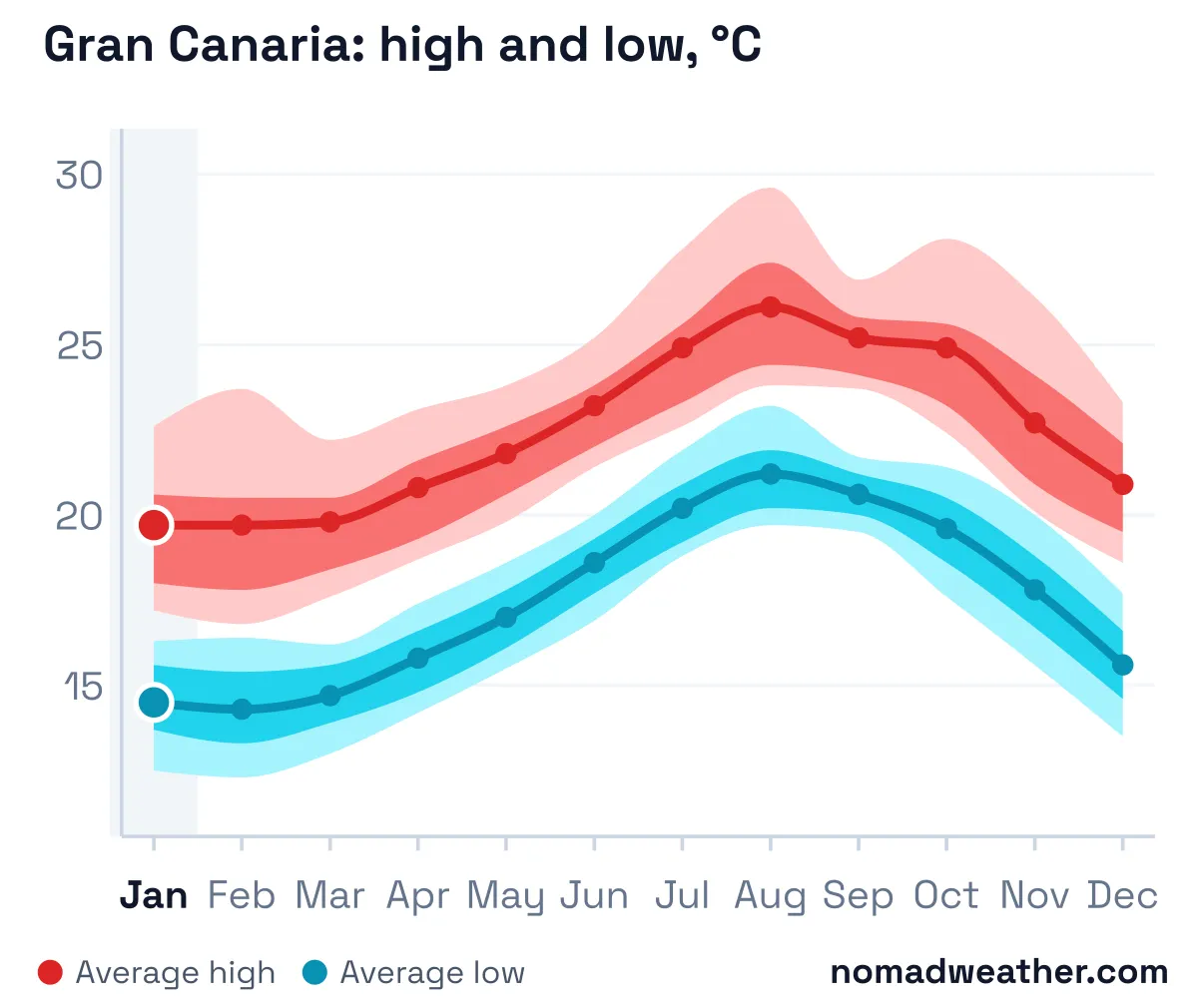
Gran Canaria: Rainfall, mm
Averages 2015-2025 · Source: Open-Meteo, CHIRPS · How we measure
Which area suits you?
Gran Canaria (Las Palmas)
20° high in Jan15° low in Jan15 mm in Jan
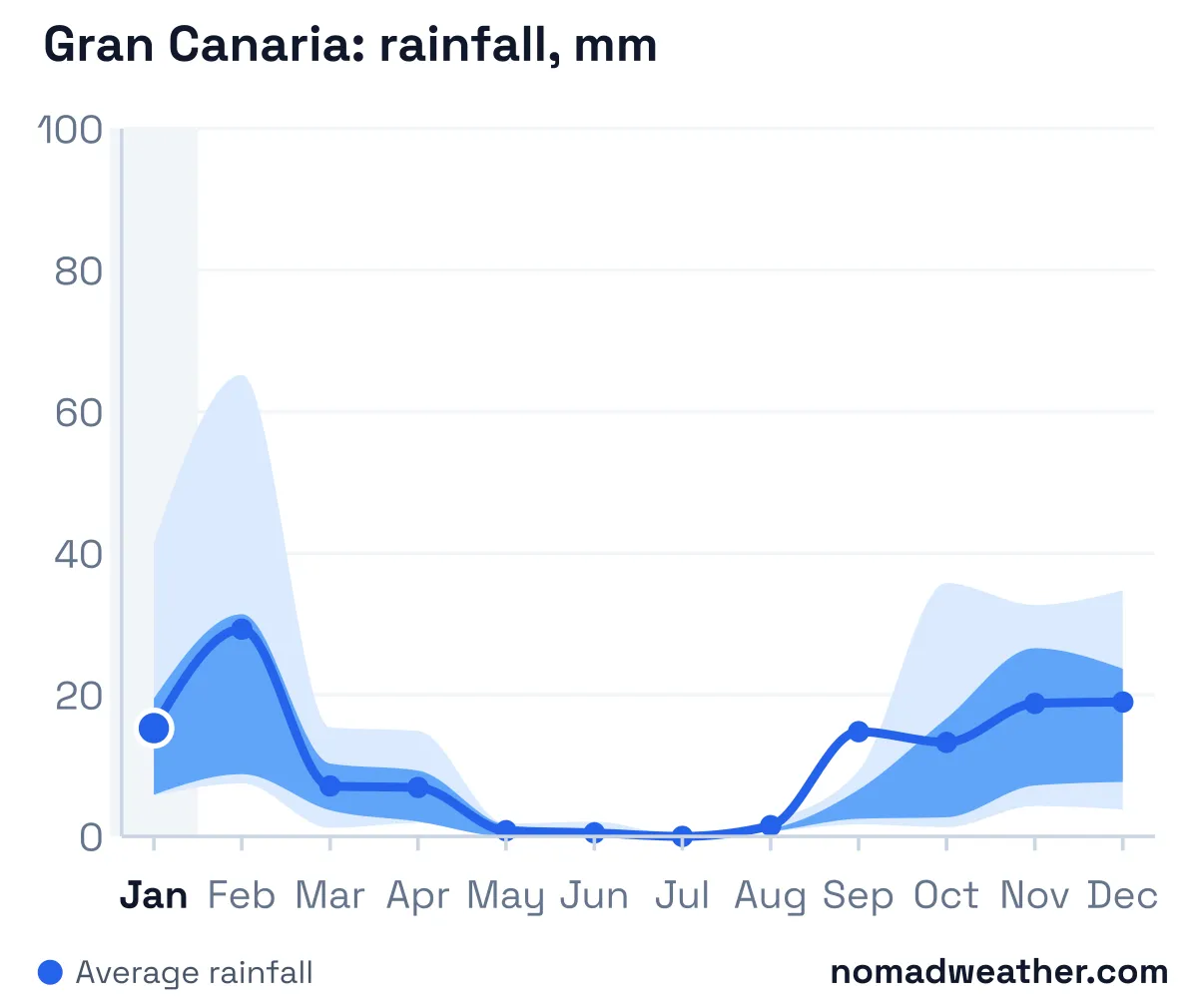
Las Palmas on Gran Canaria: a real city with coworking, fast internet and Las Canteras beach.
Suits: a mild, even climate and a city base
South coasts (south Gran Canaria, south Tenerife)
Sources report sunnier and a degree or two warmer than the north. Not in our data; most winter-sun stays are based here.
Suits: the best chance of sun on the sand
Tenerife north and La Palma
Sources report greener, with more cloud and some winter rain. Not in our data.
Suits: hiking more than a sunny terrace
Lanzarote and Fuerteventura
Sources report flatter, drier and windier, with the beaches. Not in our data.
Suits: beaches and steady wind; weigh down your papers
Where to be next: your month-by-month route, $19
A route for your months with a leave-by date for each stop, a backup, and the seasonal traps on your path. Drafted from 11 years of weather data, every number checked against it, in your inbox within 48 hours. Not included: visas, insurance or bookings.
How warm are the Canary Islands in January?
About 20°C by day and 14 to 15°C at night. Our numbers are for Las Palmas on Gran Canaria: a 20°C average high, a 15°C average low, 15 mm of rain in the month and rain on about 6 of 31 days. We measure one place for the whole archipelago, so these are Gran Canaria's north-east coast numbers.
It is not tropical. A 20°C high is a good day for walking, working on a terrace and a light jacket in the evening, not a day for lying on a beach all afternoon. Whether that suits you depends on what you are escaping.

Is it the same all winter?
Steady, and that is the point. In the chart, the temperature line barely moves from December to March, and January and February are the coolest months by only a degree or so. Rain stays low too, though February is a little wetter than January in our data (29 mm against 15 mm). The station normal for Las Palmas on Wikipedia has both months at about the same low level, so the safe reading is that both are dry on average, with February the likelier to bring a wet spell. A particular winter can differ, and we do not forecast a given year. Want the other months? See Canary Islands weather by month.
How does it compare with Lisbon, Goa and Chiang Mai?
The table puts January side by side for the places a nomad is most likely to be weighing against the Canaries.
January averages, side by side
| Place | High | Low | Rain | Rain days |
|---|---|---|---|---|
| Gran Canaria | 20° | 15° | 15 mm | 6 |
| Lisbon | 15° | 9° | 91 mm | 7 |
| Goa | 32° | 20° | 2 mm | 1 |
| Chiang Mai | 27° | 16° | 8 mm | 2 |
Averages 2015-2025 · Source: Open-Meteo, CHIRPS · How we measure
Against Lisbon, the Canaries are about 5 degrees warmer by day and much drier in millimetres, with 91 mm in Lisbon. Rain days are close (about 7 of 31 in Lisbon, about 6 on Gran Canaria), so the edge is less rain on the days it does rain, not far fewer wet days. If your reason for leaving northern Europe is cold and grey, that is a real gain.
Against Asia it is not warm enough, and this is the part most "winter sun" pages skip. Goa is beach weather: swimming weather, not just mild weather. Chiang Mai is warm in the day and has no beach, and it is also drier than the Canaries in January. For Madeira, which is cooler and wetter in January, use our page on Madeira or the Canary Islands in winter.
What the Canaries offer instead is a short flight from Europe, the same time zone as Lisbon, a Spanish-speaking base with good infrastructure, and weather that hardly changes between December and March. For a nomad who has to be on European-time calls, that is the real reason to choose them over Asia.
Which island, and which side?
We only measure Gran Canaria so far, so we cannot give you a per-island table, and we would rather say that than invent one. What the sources we read say, which we have not checked against our own data, is in the cards below. Until we add the other islands, treat the Las Palmas figures as the middle of the range: the airport station reads about a degree warmer than our point, so expect the south to feel warmer than our numbers.
What are the sea and the wind like?
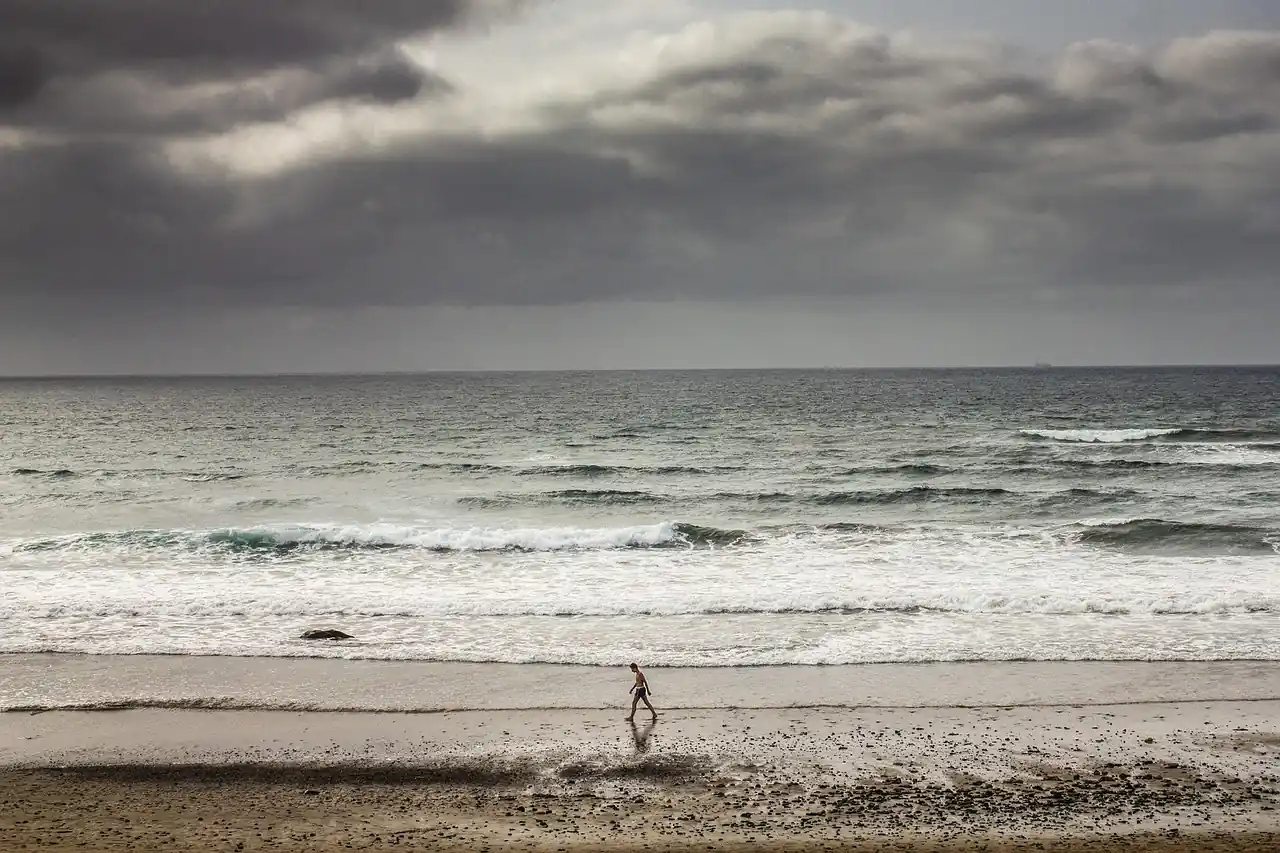
The Atlantic is cool in January: swimmable for people who like cold water, not warm. Most people paddle and sunbathe on the sand rather than swim for long. The trade winds blow most of the year, strongest on the eastern islands and on exposed beaches, and they make a 20°C day feel cooler in the shade. Now and then dust from the Sahara (calima) brings haze and a warmer, drier day. We do not hold sea temperature, so we give no figure for it.
What should a remote worker do?
Our take, on weather alone:
- Want mild, fairly dry weather and European time zones, January to March: the Canaries are the best fit we have numbers for.
- Want actual beach weather: go to Southeast Asia, Goa or the Caribbean. See where is warm in January for the ranked list.
- Want another Atlantic island: Madeira is cooler and wetter in January; see best time to visit Madeira.
- Not sure: book one month first. Mild weather rewards a long stay more than a short one, because the daily rhythm of dry, bright days is the product.
A note on the numbers
Eleven years of weather, averaged by month, stored on NomadWeather: temperatures, cloud and rain days from Open-Meteo (CC BY 4.0), monthly rain totals from CHIRPS (satellite and rain-gauge data). The data point for the Canaries is Las Palmas, so the numbers describe that city and not every island. A particular January can be warmer, cooler or wetter than the average. The airport weather station for Las Palmas reads about a degree warmer than our data point (around 21 degrees by day in January) so read our temperatures as the cool end of a typical January. "Rain on X% of days" is the share of days with at least two millimetres of rain outside the tropics (four in the tropics, as for Goa and Chiang Mai), which matches what rain gauges count.
Frequently asked questions
Is January a good time to visit the Canary Islands?
Yes, for a mild, fairly dry month. Gran Canaria averages 15 mm of rain in January, rain on about 6 of 31 days, and a 20°C daytime high.
How hot are the Canary Islands in January?
Not hot. Gran Canaria averages a 20°C high and a 15°C low in January; the south of the islands is usually a degree or two warmer.
Can you swim and sunbathe in the Canary Islands in January?
Some days, in the south, but expect 20°C highs on average and 15°C nights. It is closer to a warm spring day than to a tropical beach.
Are the Canary Islands warmer than Lisbon in January?
Yes. Gran Canaria has a 20°C high and 15 mm of rain; Lisbon has a 15°C high and 91 mm.
Which is wetter, January or February in the Canaries?
Our stored data has February wetter (29 mm against 15 mm). The official station normal for Las Palmas has both months at about the same low level, so treat both as dry on average and plan for the occasional wet spell.
Where is warmer than the Canary Islands in January?
Goa and Chiang Mai, plus most of Southeast Asia and the Caribbean. If you need 28°C or more, the Canaries are not the answer.
Not sure where yet? Pick your months and what to avoid, and get your 3 best places → Where should I go?
Weather data: Open-Meteo (CC BY 4.0), open-meteo.com; rain totals: CHIRPS (Climate Hazards Center, UC Santa Barbara). Processed by NomadWeather from stored copies of the data.