
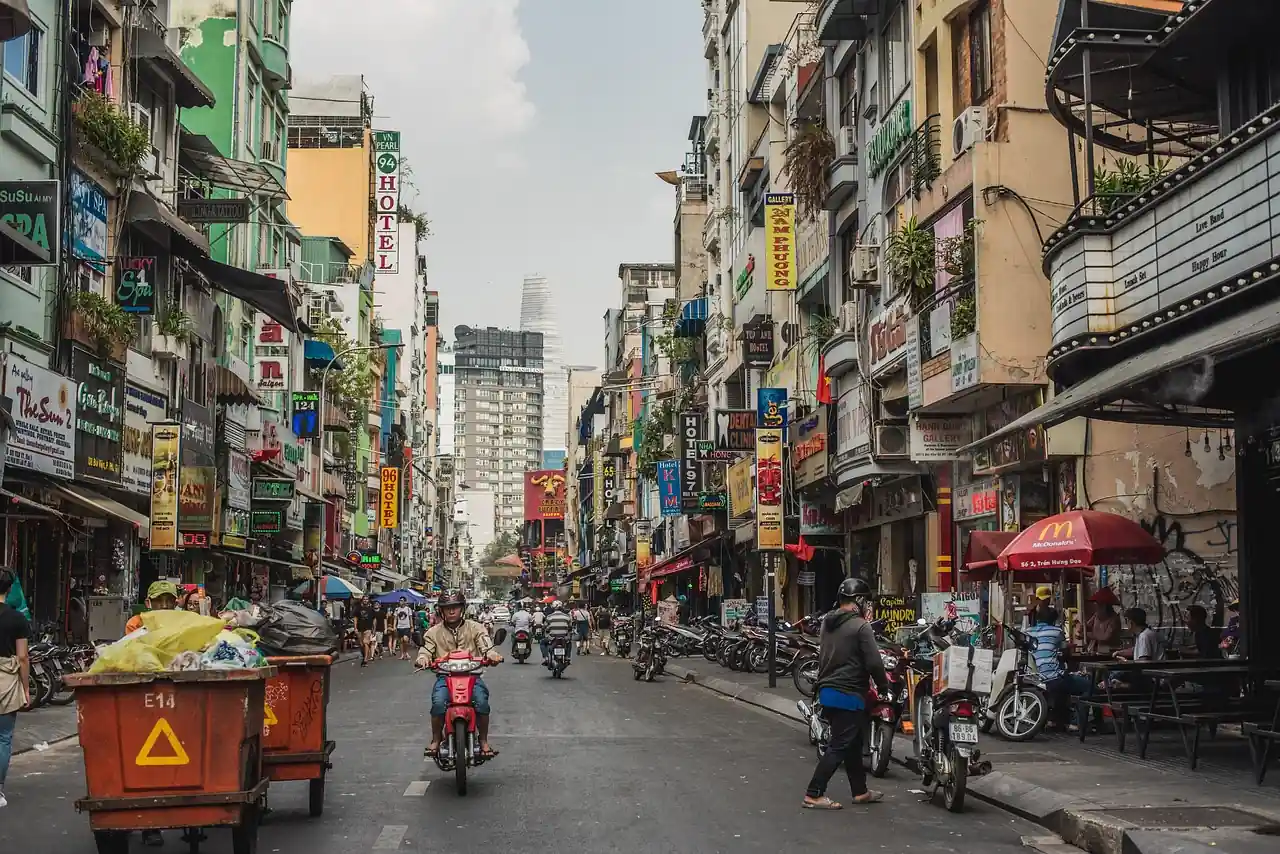
Is Vietnam good in January?
In the south, yes; elsewhere, it depends on what you need. Vietnam has three climates, and January is when they are furthest apart. Most guides sum the month up as "the dry season". For the south that is accurate. The middle of the country is more complicated, and the north is cool.
January averages, side by side
| Place | High | Low | Rain | Rain days |
|---|---|---|---|---|
| Ho Chi Minh City | 32° | 23° | 16 mm | 2 |
| Phu Quoc | 29° | 24° | 57 mm | 3 |
| Nha Trang | 26° | 22° | 57 mm | 4 |
| Da Nang | 24° | 20° | 100 mm | 10 |
| Hanoi | 21° | 14° | 24 mm | 4 |
Averages 2015-2025 · Source: Open-Meteo, CHIRPS · How we measure
Ho Chi Minh City is in full dry season. Phu Quoc has more rain but the fewest rain days of the beaches we track. At the other end, Hanoi is dry but cool, and the middle of the country is the part to plan around.
Where to be next: your month-by-month route, $19
A route for your months with a leave-by date for each stop, a backup, and the seasonal traps on your path. Drafted from 11 years of weather data, every number checked against it, in your inbox within 48 hours. Not included: visas, insurance or bookings.
How wet is the central coast in January?
Still wet, but improving fast. Da Nang is a long way down from December, when it gets 331 mm and rain on 17 days, and it falls again to 28 mm in February. So the month feels like relief if you arrive from a December storm cycle, and like a wet month if you arrive from Ho Chi Minh City. Nha Trang is further south and drier, at 57 mm against 316 mm in December and 18 mm in February.
If your plan is "dry weather on the central coast", the data says wait for February (Da Nang still has rain on about 6 of 28 days, but March, at about 3 of 31 days, is the first month that feels dry), or choose Nha Trang over Da Nang. Waiting four weeks costs you very little.
What is Hanoi like in January?
Cool and grey: a 21°C high, 14°C at night, 24 mm of rain and mostly overcast skies. That is not harsh weather, but it is not a "warm" month, and indoor heating is rare in Vietnam, so flats can feel cold. Pack layers and expect little sun. Hanoi is a good city, not a weather pick, and it barely warms through February: this is why many nomads spend winter further south. For all twelve months, see Hanoi weather by month.
Where should a remote worker base in January?
- Warm and dry, city life: Ho Chi Minh City. January starts its driest stretch, January to March, with nights of 23°C. For all twelve months, see Ho Chi Minh City weather by month.
- Warm and fairly dry, beach: Phu Quoc, an island with a smaller work setup than the big cities.
- Milder, mixed: Nha Trang, better than Da Nang in January.
- Cool and grey: Hanoi, for the city and not for the weather.
- Wet but improving: Da Nang. Consider waiting until February; Da Nang weather by month shows the whole year.
Does the south stay comfortable after January?
Not for long. Ho Chi Minh City stays dry through the spring, but it gets hotter: the average high is 32°C in January, 34°C in February and 35°C in March, with the humid air drying out as it warms. January is the comfortable end of the dry season. If you are planning a longer stay in the south, arrive early and expect to move your outdoor time to the morning from March. Phu Quoc is a degree or two cooler at 29°C in January and 31°C in March, but its rain returns in March (75 mm) on a shorter dry spell than the city's.
What else decides January?
Tet, the Lunar New Year, moves from year to year; in 2027 it falls on 6 February. Many shops, cafes and some coworking spaces close for several days, transport books up and prices rise, so check the date for your year before you book a base, especially if you rely on one coworking space. This is not in our weather data, so treat it as a planning flag, not a measurement. Smaller coast towns and islands usually have fewer cafes and coworking spaces than the big cities, so if you need reliable video calls, check the internet at your actual accommodation before you commit to a month.
For a wider list of warm places in this month, see where is warm in January, and for the month after, where is warm in February.
A note on the numbers
All figures are 11-year averages for each destination's coordinates, grouped by calendar month. Rain totals come from CHIRPS (satellite and rain-gauge data); rain days and temperatures come from the Open-Meteo archive. A rain day is a day with at least four millimetres of rain in the tropics (two millimetres elsewhere), which matches what rain gauges count. Weather only: no prices, crowds, sea conditions, or air quality (Hanoi has winter smog we do not yet measure). A particular year can be wetter or drier than average. See Data Sources.
Frequently asked questions
Is January a good time to visit Vietnam?
It is a good month for the south. Ho Chi Minh City has 16 mm of rain and a 32°C average high. It is a mixed month for the north and centre.
Is Hanoi cold in January?
Cool rather than cold: an average high of 21°C and a low of 14°C, with grey skies and 24 mm of rain.
Is Da Nang rainy in January?
Yes, still. Da Nang gets 100 mm with rain on about 10 of 31 days. That is much better than December at 331 mm, and February cuts it to 28 mm.
Where is the best beach in Vietnam in January?
Phu Quoc, with 57 mm of rain and a 29°C high. Nha Trang has about the same rain (57 mm) but is cooler at 26°C, with rain on about 4 of 31 days against Phu Quoc's about 3 of 31.
When does Da Nang dry out?
February, March and April are all dry by volume, at 28, 25 and 28 mm. February is already much better than January at 100 mm, though rain still falls on about 6 of 28 days; March (about 3 of 31 days) is the first month that feels dry.
Not sure where yet? Pick your months and what to avoid, and get your 3 best places → Where should I go?
Weather data: Open-Meteo (CC BY 4.0), open-meteo.com; rain totals: CHIRPS (Climate Hazards Center, UC Santa Barbara). Processed by NomadWeather from stored copies of the data.