
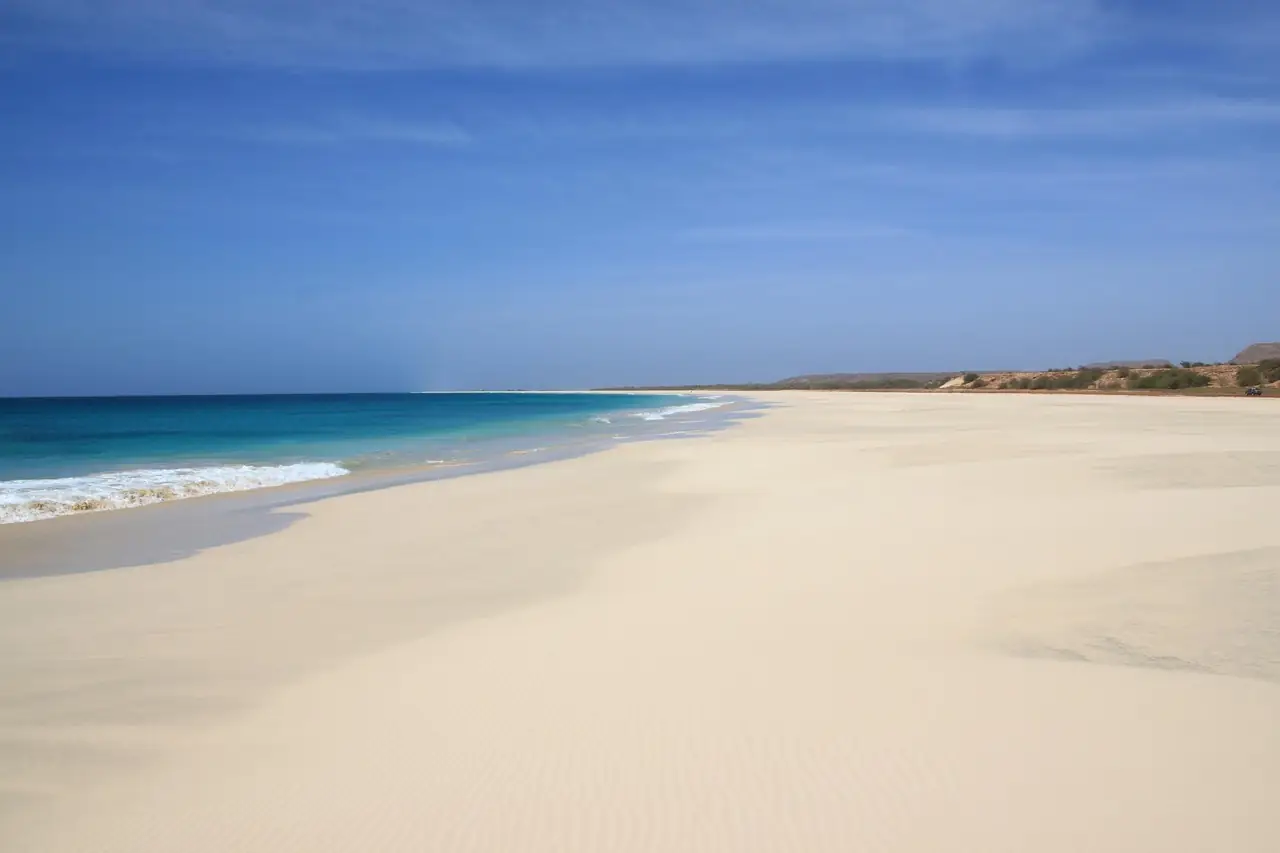
What is the climate of Cape Verde?
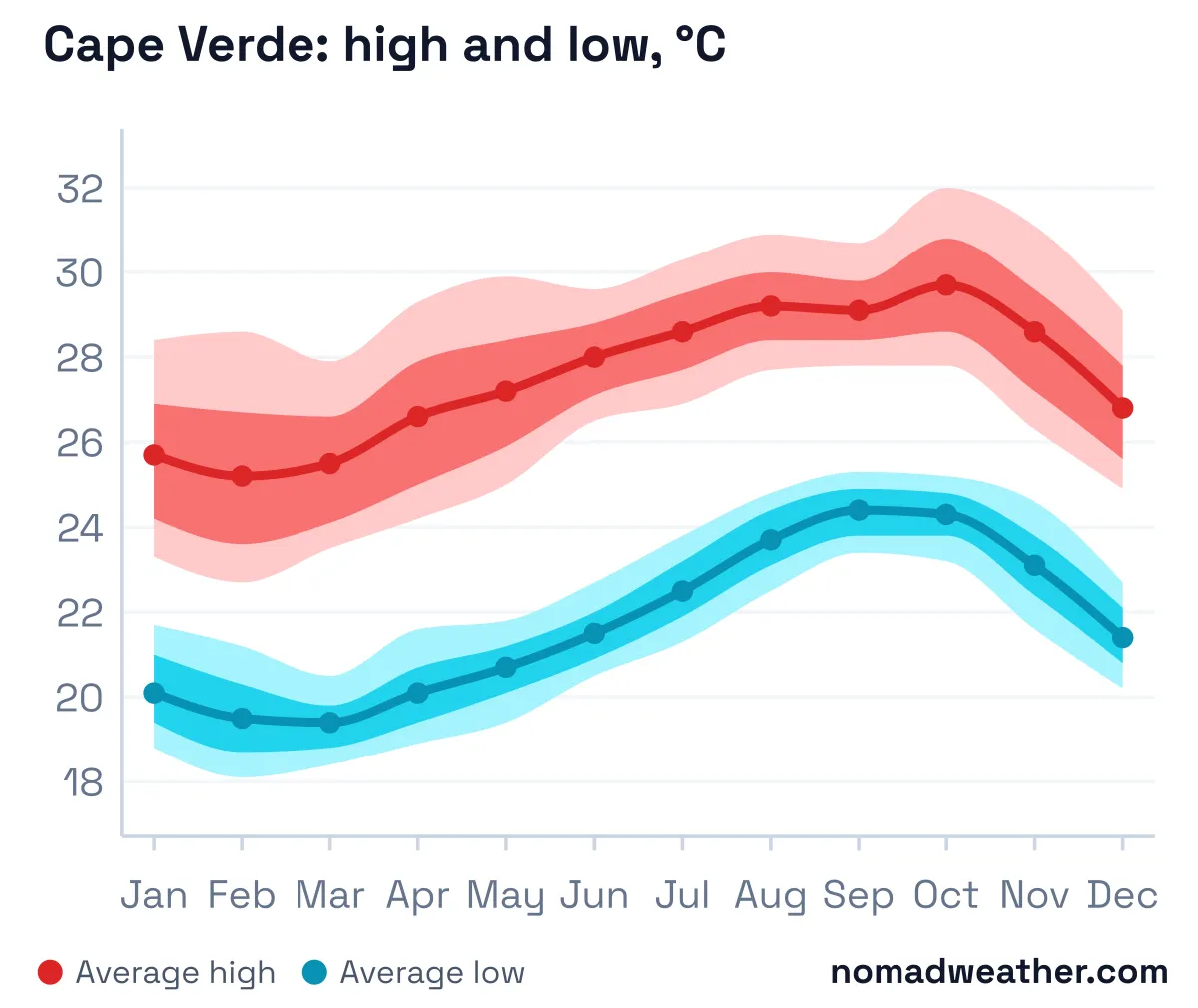
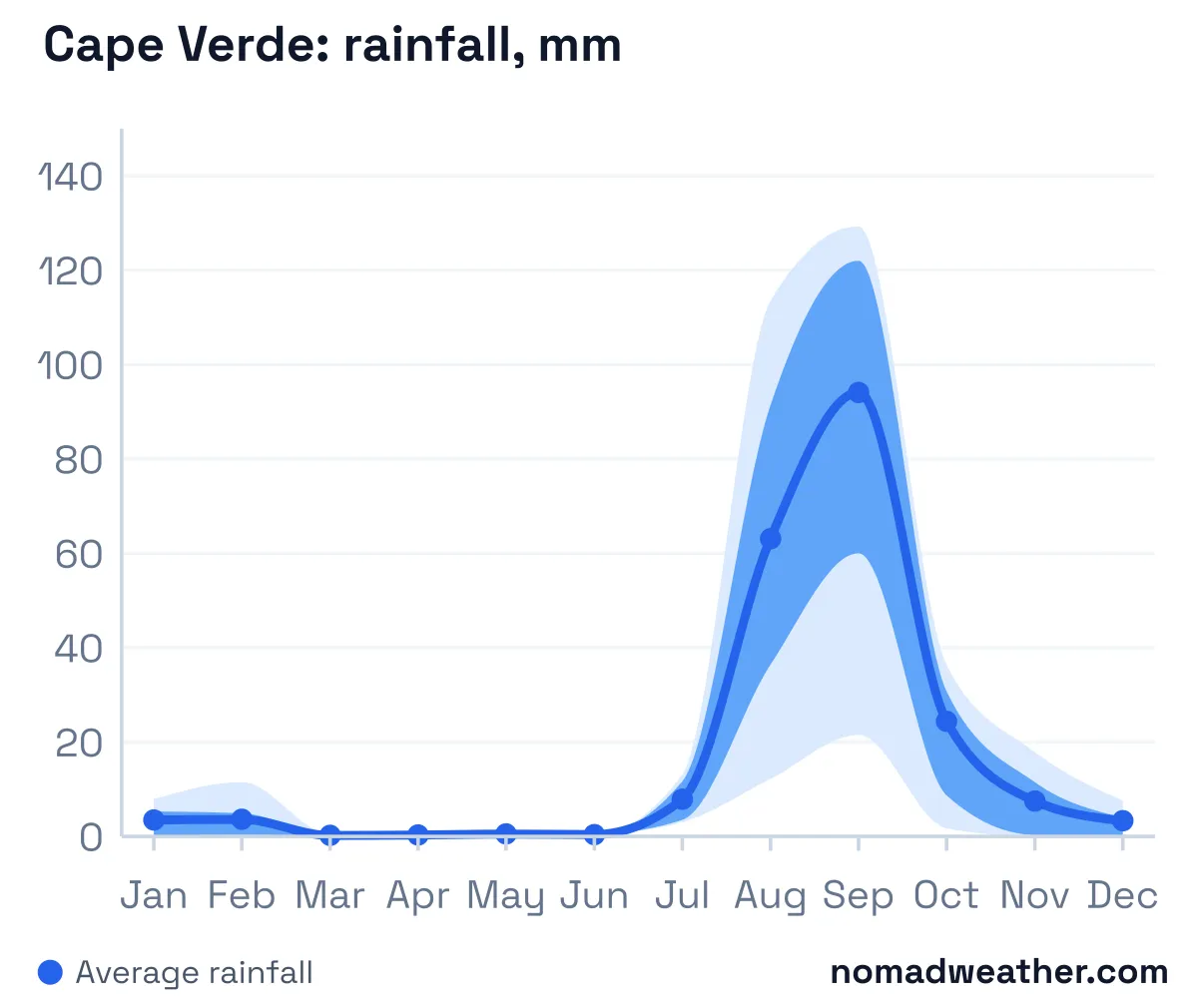
Dry and warm all year, with one short wet season in late summer. Daytime highs on Santiago run from 25° in February to 30° in October, and nights stay above 19°. Sal and São Vicente are a degree or two cooler in winter. Rain comes almost only in August, September and October; from November to June it is 8 mm a month or less.
Cape Verde: Average high and low temperature, °C
Cape Verde: Rainfall, mm
Averages 2015-2025 · Source: Open-Meteo, CHIRPS · How we measure
Read it from the left: the one bump from August to October is the whole wet season, and the rest of the year is flat. The warm months are also the wet and humid ones. The Canaries work the other way round, cooler all year with their rain in winter, when Cape Verde is dry: our Canary Islands guide has the winter comparison.
Where to be next: your month-by-month route, $19
A route for your months with a leave-by date for each stop, a backup, and the seasonal traps on your path. Drafted from 11 years of weather data, every number checked against it, in your inbox within 48 hours. Not included: visas, insurance or bookings.
When does it rain in Cape Verde?
Almost only from August to October. On Santiago, the main island with the capital Praia, rain is 63 mm in August, 94 mm in September and 24 mm in October, with rain on about 4 of 31 days in August and 6 of 30 in September. March and May are close to zero. Rain here comes in short, heavy bursts, so even a wet month is mostly sun.
The flatter islands are lighter. We only hold weather-model values for Sal and São Vicente, so we compare the three inside that one model: Sal gets about half of Santiago's rain in August and less than a third in September, and São Vicente about half over the two months. Read that as the pattern, not as exact millimetres. If you want to be in the islands in September and still have mostly dry days, Sal is the safer pick.
How windy is it, how humid, and how warm is the sea?
Wind, humidity and the sea tell one story, and the table puts the three islands side by side:
| Island | Humidity | Wind, Feb / Aug (km/h) | Sea, Feb / Sep (degrees) |
|---|---|---|---|
| Santiago | 67% to 82% | 23 / 10 | 24 / 29 |
| Sal | 69% to 77% | 25 / 15 | 23 / 28 |
| São Vicente | 67% to 76% | 27 / 17 | 23 / 28 |
Humidity is the lowest to the highest month; wind is the daily average. Each island's main town, 2016-2025. Treat the Sal and Mindelo wind figures as exposed-coast values: sheltered spots feel less.
From January to May the trade wind blows at 20 to 27 km/h. It is why kitesurfers and windsurfers come to Sal and São Vicente, and why humidity of around 70% does not feel heavy. It also means a terrace on the windward side of a windy island is a poor place to work in those months. São Vicente is the windiest, at 27 km/h in February and May; Santiago is the calmest.
The sticky months are July to October. The wind drops to 10 to 22 km/h, highs reach 29° and Santiago's humidity sits at 76% to 82%. If you are sensitive to damp air or work in a room without air conditioning, aim for January to May.
The sea is coolest in February and March and warmest from August to October. For swimming without a wetsuit or a cold shock, October to December is the window: the sea is still 25 to 29 degrees, the rain is gone on most days and the wind has eased. February and March are fine for sun on the beach, but the water feels cool, especially on Sal and São Vicente.
Which island for which month?
Santiago is the safest all-round choice, Sal the best for dry autumn weather, and São Vicente for people who like wind and music.
- January to March: Santiago for calm and warmer water; Sal or São Vicente only if you want wind sports.
- April to June: all three are dry; Santiago is the least windy.
- July to September: the humid, cloudier months with the only real rain. Sal has the least of it.
- October to December: the best overall window, with warm sea, falling humidity and rain only early in October.
What would we do?
For a month of work with sun, book March to May if you like wind and dry air, or October to December if you want warm water. Skip August and September unless you pick Sal and accept humidity near 80%. If you are comparing winter sun options, February looks like this, and where is warm in December and where is warm in February rank more places:
February averages, side by side
| Place | High | Low | Rain | Rain days |
|---|---|---|---|---|
| Cape Verde | 25° | 20° | 4 mm | 0 |
| Canary Islands | 20° | 14° | 29 mm | 6 |
| Madeira | 18° | 14° | 67 mm | 5 |
| Goa | 33° | 20° | 1 mm | 0 |
Averages 2015-2025 · Source: Open-Meteo, CHIRPS · How we measure
This is a weather view only: it does not cover flights between islands, internet quality or where the nomads actually live, so check those before booking.
How sure are these numbers?
They are month-of-year averages over eleven years of satellite-and-station reanalysis data at one point per island, so any single year can be drier, windier or cooler. Grid data tends to run low on daytime highs against a station thermometer and cannot see island microclimates: the high interiors of Santiago and Santo Antão get far more rain than the coast. Humidity, wind and sea temperature come from a separate Open-Meteo pull, while the Santiago rain totals come from CHIRPS and the rain days and temperatures from Open-Meteo, so island rain values from the two pulls can differ by tens of millimetres in the wet months. Read them as the shape of the year, not as a forecast. A rain day is a day with at least four millimetres of rain.
Frequently asked questions
How humid is Cape Verde?
Between 67 percent and 82 percent relative humidity on average. February and March are the least humid on Santiago (67 percent to 69 percent) and September the most (82 percent). The wind keeps it from feeling heavy in winter.
When does it rain in Cape Verde?
Almost only in August, September and October. Santiago gets 63 mm in August, 94 mm in September and 24 mm in October; from November to June it gets 8 mm or less a month.
What is the climate of Cape Verde?
Dry and warm all year, with a short wet season in late summer. Daytime highs run from 25°C in February to 30°C in October on Santiago, and the nights stay above 19°C.
Which Cape Verde island is windiest?
São Vicente (Mindelo), with winds averaging 27 km/h in February and May, then Sal at 25 km/h in February. Santiago is calmer, at 23 km/h in February.
What is the sea temperature in Cape Verde in winter?
About 23°C to 25°C. February and March are the coolest at 22°C to 24°C depending on the island, and Sal is the coolest of the three.
What is the best month to visit Cape Verde?
March to May for dry, bright weather: rain is under 1 mm a month on Santiago and cloud cover is around a third of the sky. For a calmer sea and warmer water, October to December.
Not sure where yet? Pick your months and what to avoid, and get your 3 best places → Where should I go?
Weather data: Open-Meteo (CC BY 4.0), open-meteo.com; rain totals: CHIRPS (Climate Hazards Center, UC Santa Barbara); Funchal (Madeira): Open-Meteo. Processed by NomadWeather from stored copies of the data.