
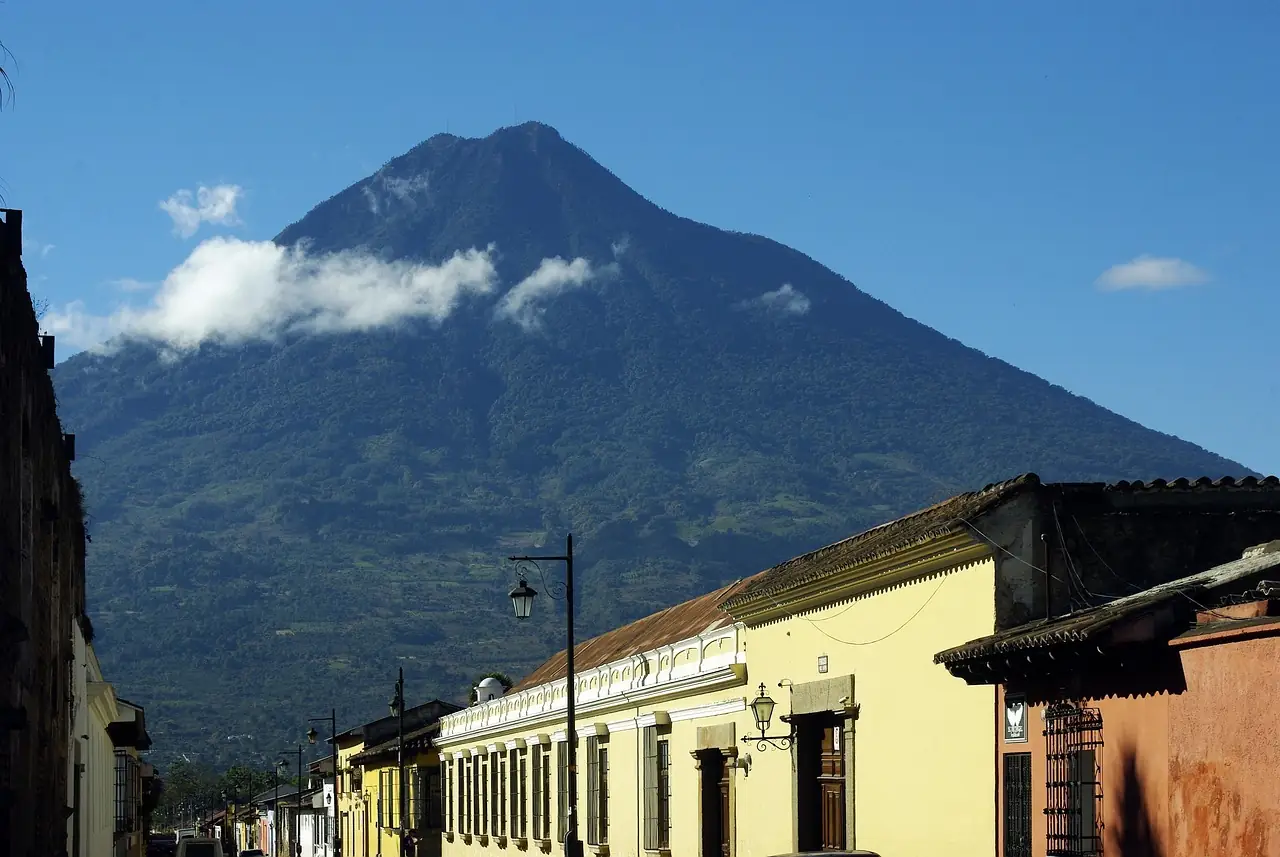
What is Antigua's year like?
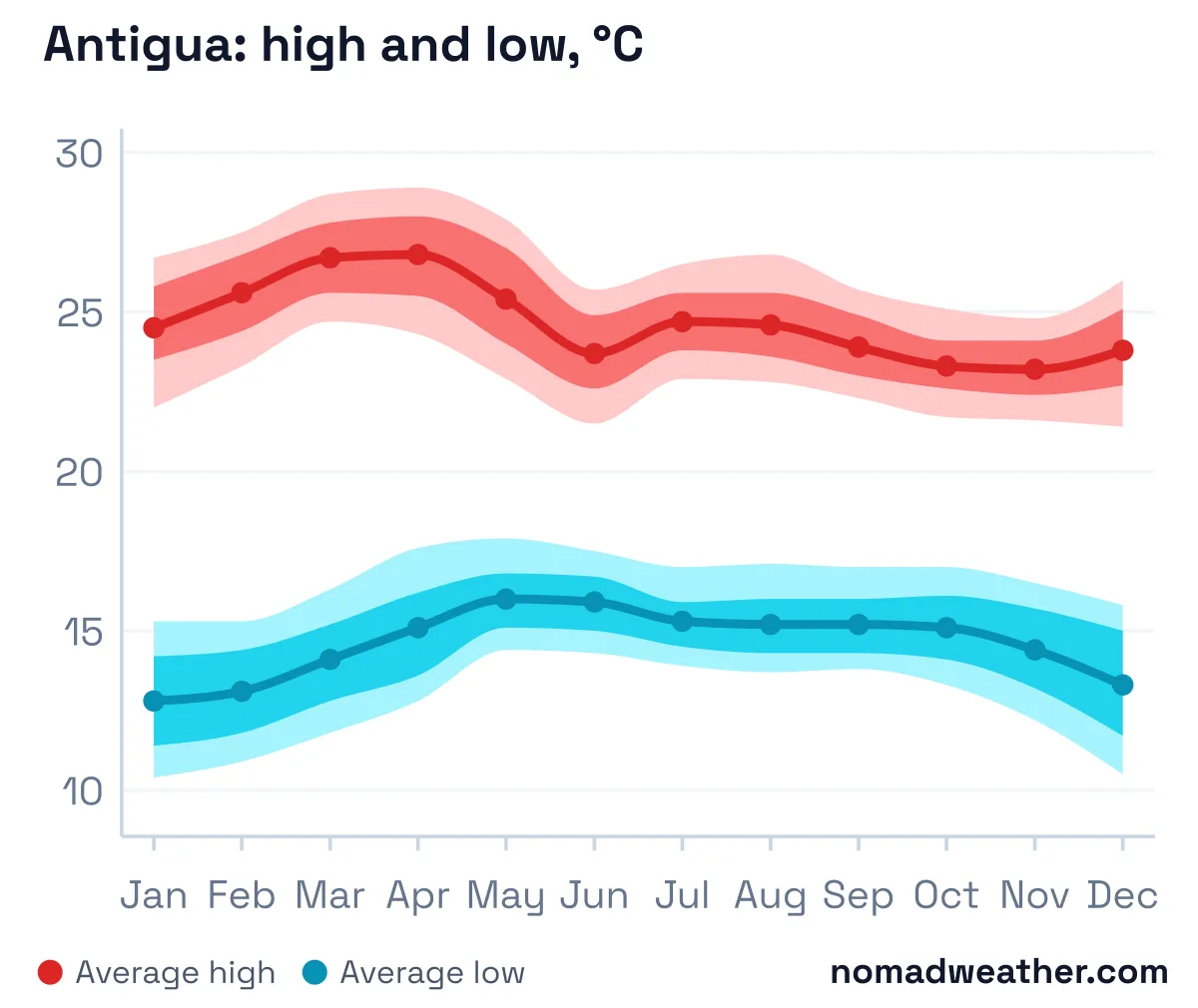
Antigua has two seasons, and the dry one is the one nomads come for. Temperature barely moves; rain does. Here is the year, with the high and low temperature and the rain:
Antigua: Average high and low temperature, °C
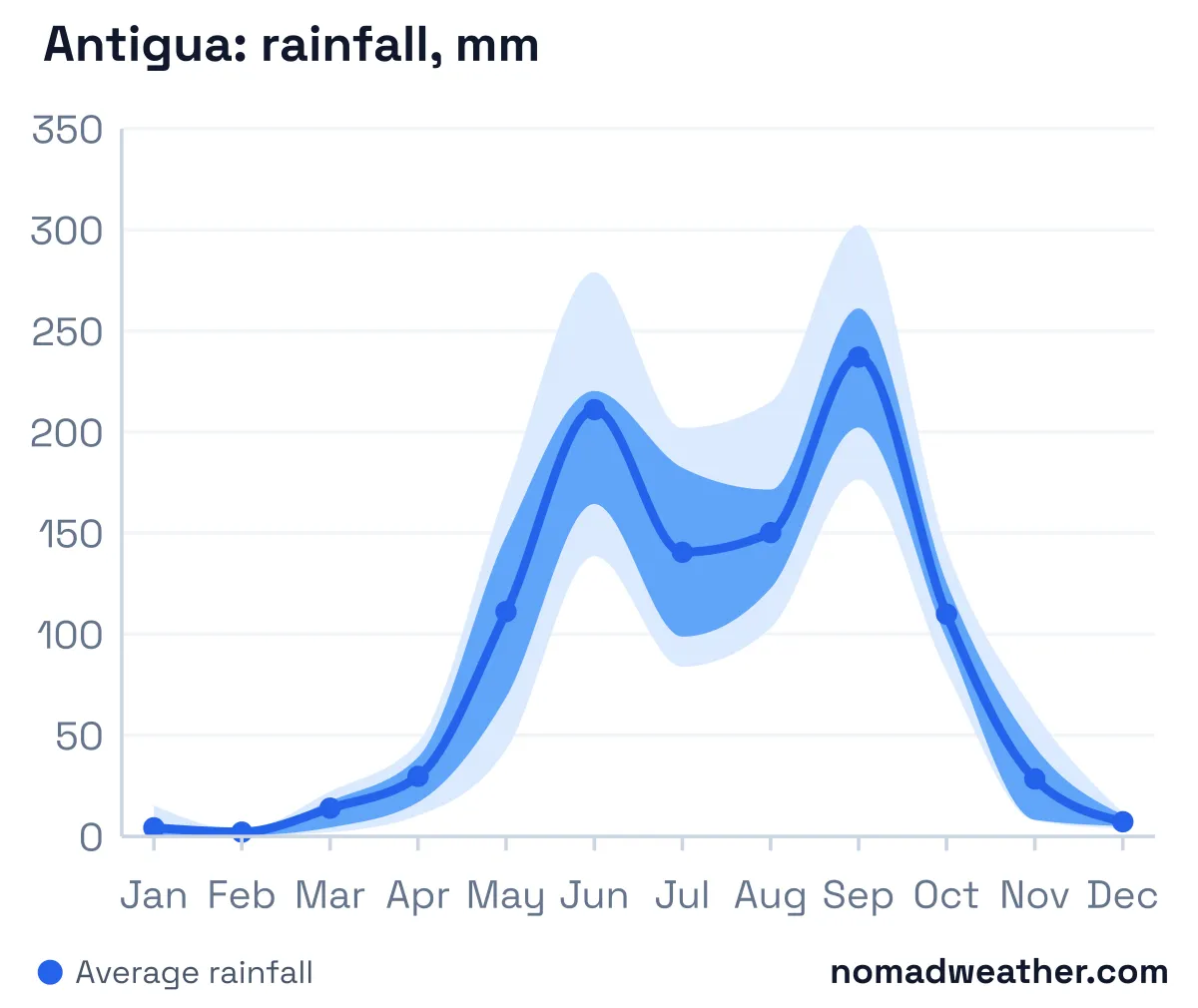
Antigua: Rainfall, mm
Averages 2015-2025 · Source: Open-Meteo, CHIRPS · How we measure
Read the rain first. November to April is close to dry, with the cleanest stretch from December to March, and May to October rains hard, with two peaks: June (211 mm) and September (237 mm). The reason for the flat temperature line is altitude: Antigua sits in the Guatemalan highlands, so it is mild by day and cool at night in every month, not hot.
Where to be next: your month-by-month route, $19
A route for your months with a leave-by date for each stop, a backup, and the seasonal traps on your path. Drafted from 11 years of weather data, every number checked against it, in your inbox within 48 hours. Not included: visas, insurance or bookings.
When is the dry season, exactly?
November to April. In December, January and February there are 0 to 2 rainy days a month, and cloud is at its lowest of the year. A rainy day is a day with at least four millimetres of rain, so a short shower does not count.
November is the shoulder: 29 mm and about 4 rainy days, so you may see the odd wet afternoon. April is the switch. It is the warmest month, with a 27°C high, and it already gets 30 mm on about 5 days as the first storms build. If you arrive in April, expect a dry, bright start and a wetter end to the stay.
How wet is the rainy season, really?
Wetter than the postcards. From May to October rain falls on 12 to 19 days of each month, and September is the worst, with 237 mm on about 19 of 30 days. We hold monthly totals, not the time of day, so we cannot say the rain always comes in the afternoon; plan for wet spells that can last more than a day.
October is when it starts to ease, and by November it is a different town. If you work from a café terrace or a rooftop, that is the practical difference: from December to March you can plan to sit outside, and from June to September you cannot.
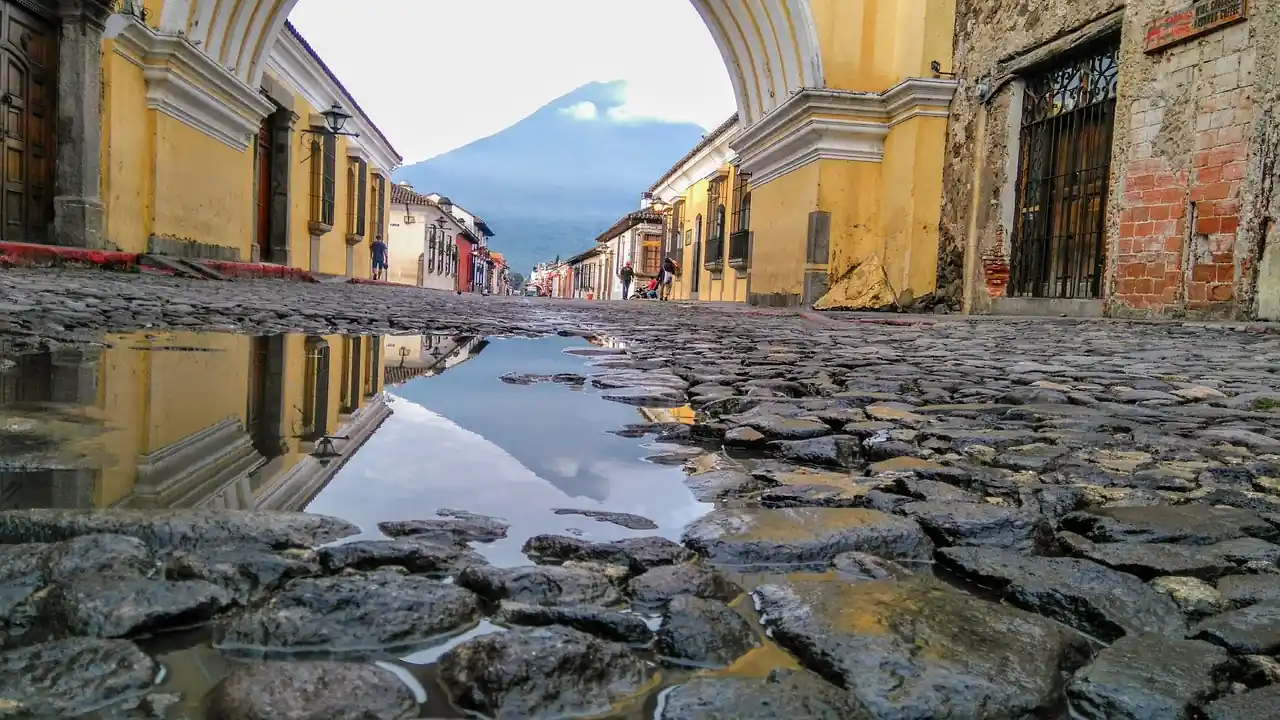
Is it warm in Antigua?
By day, pleasantly: highs of 23°C to 27°C all year. By night, no: the low is 13°C in December and January, so bring a sweater for evenings and early mornings, and expect to want a blanket where a house has no heating. In the wet months nights are a little warmer and days a little cooler, and it is damp.
That mix is the opposite of the coast. If you want a hot beach month, this is the wrong town. If you want to sleep well, the cool nights are a plus, and a light fleece is the one thing worth packing, along with a rain jacket if you come between May and October.
How does Antigua compare with Tulum and Bogotá?
The table puts January side by side for two other Latin American bases.
January averages, side by side
| Place | High | Low | Rain | Rain days |
|---|---|---|---|---|
| Antigua | 25° | 13° | 4 mm | 0 |
| Tulum | 27° | 22° | 93 mm | 4 |
| Bogotá | 20° | 8° | 45 mm | 4 |
Averages 2015-2025 · Source: Open-Meteo, CHIRPS · How we measure
Against Tulum, Antigua is drier in January but cooler by day and much cooler at night. Against Bogotá, which sits higher still, Antigua is warmer and far less rainy. For the Pacific coast of Costa Rica, which is dry in the same months but hot, see Costa Rica weather by month. For any one month of Antigua, the Antigua page is faster.
What should a remote worker do?
Our take, on weather alone:
- Want a dry, bright month with cool evenings: December to March. January and February are the safest.
- Want to avoid the rain but pay less: November and April are the shoulders. Pack for one wet afternoon a week.
- Want to stay in the wet season anyway: expect rain most days from June to September and plan work around it; October is the first easier month.
- Want hot beach weather instead: see where is warm in January.
A note on the numbers
Eleven years of weather, averaged by month, stored on NomadWeather: temperatures and cloud from Open-Meteo (CC BY 4.0), monthly rain totals from CHIRPS (satellite and rain-gauge data). The data point is Antigua Guatemala itself; nearby Guatemala City and the Pacific coast differ. A particular year can be wetter, drier or later than the average, and we do not forecast a given year.
Frequently asked questions
When is the dry season in Antigua, Guatemala?
November to April. November has 29 mm of rain and about 4 rain days, then December 7 mm, January 4 mm and February 2 mm with next to no rain days. March (14 mm) and April (30 mm) are the tail.
What is the best month to visit Antigua for weather?
January and February. Both are close to rain-free, with highs of 25°C to 26°C, the lowest cloud cover of the year, and nights of 13°C. December and March are nearly as good.
How rainy is Antigua in the wet season?
Heavily, from June to October. September gets 237 mm on about 19 of 30 days and June 211 mm on about 19 of 30 days. July and August are a little lighter, 141 mm and 150 mm.
Is Antigua hot?
No. The average high stays between 23°C and 27°C all year, and the average low between 13°C and 16°C. April is the warmest month, at a 27°C high.
Is Antigua colder than Mexico or Costa Rica?
Yes, at night. Antigua's January low is 13°C, against 22°C in Tulum and 24°C in Santa Teresa, Costa Rica. By day it is milder too.
Not sure where yet? Pick your months and what to avoid, and get your 3 best places → Where should I go?
Weather data: Open-Meteo (CC BY 4.0), open-meteo.com; rain totals: CHIRPS (Climate Hazards Center, UC Santa Barbara). Processed by NomadWeather from stored copies of the data.