
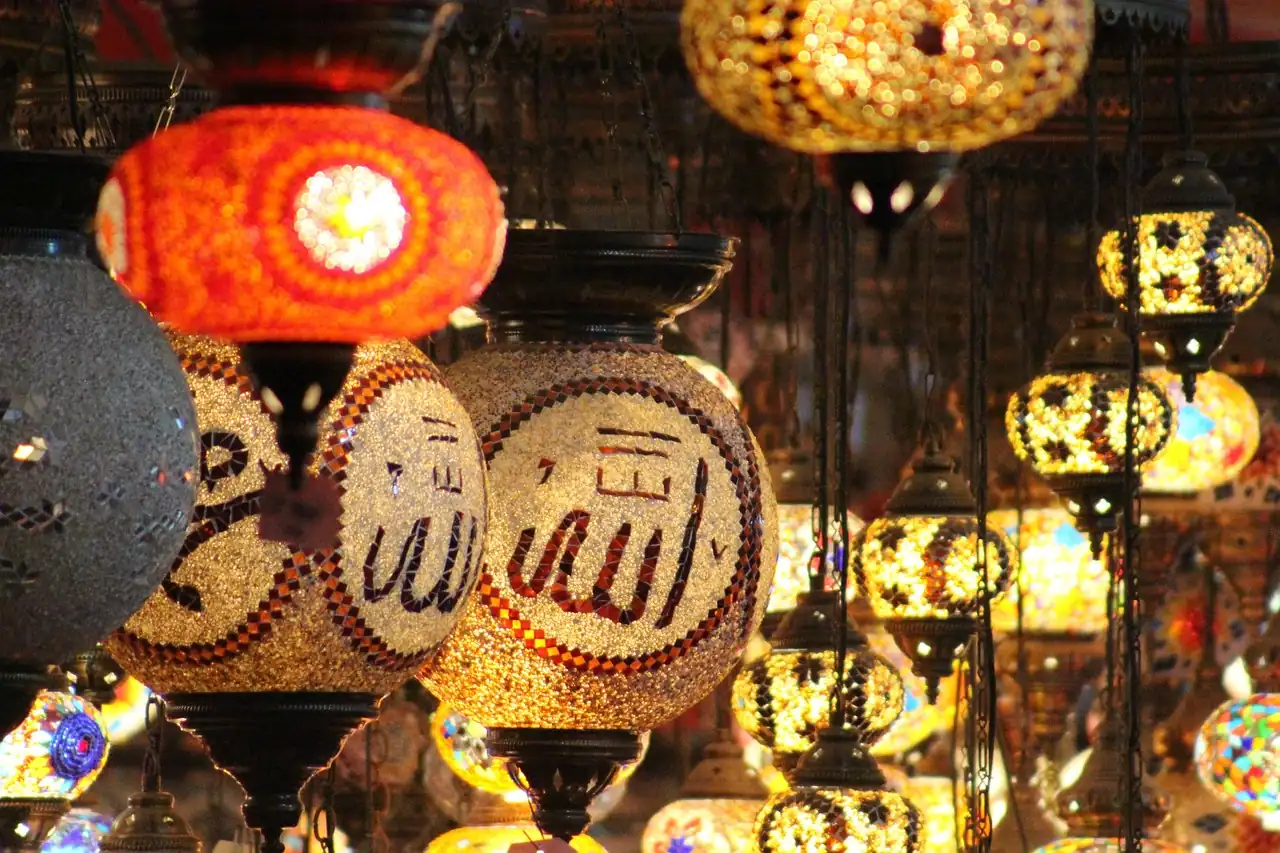
Short version: Ramadan 2027 is expected to start around Monday 8 February and end around 8 or 9 March, with Eid al-Fitr on 9 or 10 March (UAE Astronomy Centre projection, via The National); the moon sighting in each country sets the exact day. Bali carries on as usual, Dubai, Marrakech and Istanbul shift hours, Java, Lombok and Kuala Lumpur change more by day. The end of the month, Eid, is when to plan your movements.
Where to be next: your month-by-month route, $19
A route for your months with a leave-by date for each stop, a backup, and the seasonal traps on your path. Drafted from 11 years of weather data, every number checked against it, in your inbox within 48 hours. Not included: visas, insurance or bookings.
When is Ramadan in 2027?
Around 8 February to 8 or 9 March. Ramadan follows the Islamic calendar, which depends on the moon, so there is no fixed Western date and the first day can differ by a day between countries.
- UAE: The Emirates' Astronomy Centre projects a start on 8 February 2027. Eid al-Fitr is expected on 9 or 10 March, subject to the moon-sighting committee. The National tells residents to treat the dates as a general guide until official confirmation.
- Indonesia: Muhammadiyah's calendar puts 1 Ramadan on Monday 8 February. The government decides after a moon-sighting meeting shortly before, and BMKG's calculations point to a 30-day month, so the reports we found put Eid on 9 or 10 March.
- Malaysia, Morocco and Turkey: we found no official 2027 date yet. Expect the same window, plus or minus a day.
Official dates arrive in the last days before the month. Plan with a one-day margin at each end.
Where to be next month, by email
One email at the start of each month: where it's warm, dry and smoke-free next. We'll email you in early December to confirm, then once a month. Free, unsubscribe any time. Privacy
What changes for a remote worker, and what doesn't?
Your internet, your flat and most of your hours. What changes is the daytime rhythm around you. Fasting people eat nothing between dawn and sunset, so some local cafes open late or only for the evening meal (iftar). Offices and shops in Muslim-majority places run shorter days. Evenings get lively and busy around sunset, and the roads fill before it.
The practical result: work in the morning, expect lunch to be a quieter affair in places that fast in public, and treat the sunset hour as a time not to be crossing town. Tourist cafes, hotels and food courts mostly carry on, as each base below shows.
Ramadan in Bali: does it change anything for remote workers?
Barely. Bali is mostly Hindu and, per a February 2026 guide for tourists, "most cafés, restaurants, beach clubs and tourist services operate as usual", though some staff are fasting and daytime service can be slower. Coworking and cafes in Canggu, Ubud and Uluwatu should look normal.
The change comes at Eid. Another guide notes that Lebaran can make Bali busier as domestic visitors arrive, mainly from Java, and that some small family-run warungs close while their owners go home for the holiday. Expect fuller roads and higher villa demand in the days around 9 to 10 March. We do not have price data for that week, so check rates before you book. February's weather is the larger story in Bali: rain falls on about 20 days in Canggu. Our Bali by area guide covers it.
Java and Lombok: how much do they change?
More than Bali. On Java the same tourist guide says "fewer places open during the day, and shop and service hours may be shorter or shifted", and traffic is heavy before sunset. It advises not eating or smoking demonstratively in front of people who are fasting.
We found no current source on Lombok. It is mostly Muslim, so expect the Java pattern more than the Bali one, with tourist areas around Kuta and Selong Belanak easier than local towns. Check the cafe you plan to work from the week before. Lombok's February is wet, 267 mm of rain on about 17 days, so see our Lombok guide before choosing it as the quiet alternative to Bali.
Ramadan in Kuala Lumpur and Penang: are cafes and food courts open by day?
Most of what a visitor needs. Malaysian state laws make it an offence for Muslims to eat or drink in public during fasting hours; they do not bind non-Muslims, and enforcement is aimed at Muslims (CNN, 2024). In the big cities, Chinese- and Indian-run restaurants and food courts stay open by day. In the more conservative states, such as Kelantan, Kedah and Terengganu, daytime food is harder to find. Rules and enforcement vary by state, and the usual advice is not to eat, drink or smoke in public in view of others.
For a nomad the better part is the evening. Ramadan bazaars are a feature of the month. We found no current source on Hari Raya travel, but expect people to travel home around Eid, and book any onward move for the second week of March early. KL's February is the best month of its winter, with about 9 rainy days and 187 mm; our Kuala Lumpur guide has the detail. We hold no weather data for Penang.
Working in Dubai during Ramadan: how does the day change?
The clock changes more than the food. In 2026 the UAE cut private-sector working hours by two hours a day for Ramadan, with flexible or remote arrangements allowed. Expect the 2027 rule to be announced a few days ahead of the month, and expect shorter hours at offices and some coworking desks.
On daytime eating, the sources we found disagree: some call public eating no longer an offence, others still cite old fines, and none was an official government page. We could not settle it, so we will not state a rule. Hotels and mall food courts are the common daytime choices, and the courteous default is to eat out of sight. Hotels advertise iftar set menus. Eid is a break of at least three paid days, longer if Ramadan runs to 30 days, according to The National. February is Dubai's easy weather: 25° by day, 18 mm of rain in the month. Our Dubai guide has the rest.
Marrakech: do the cafes stay open?
The tourist ones do. A February 2026 Morocco guide says you are welcome to eat in restaurants by day: "Many local restaurants are closed during the day, but plenty of tourist-friendly restaurants stay open", and most tourist shops and the souks run as usual. It also advises avoiding eating, drinking or smoking in public, and warns that some attractions may close for an hour or two.
Practically: a work cafe in a tourist area is fine, a local-style cafe may open late or at sunset. We hold no weather data for Marrakech, so we do not give February numbers for it.
Istanbul: what do visitors notice?
Less than they expect. One guide says "non-fasting travelers can eat and drink during the day in Istanbul", hotels serve breakfast and cafes in tourist areas generally keep working, with discretion as a courtesy in conservative neighbourhoods. Some local eateries open later or focus on iftar, so do not assume a usual all-day cafe keeps its hours. Major attractions keep normal or near-normal schedules, but it advises checking at the end of Ramadan and during the Bayram holiday, when intercity transport gets busier and some businesses adjust.
Iftar restaurants with a view fill up; one guide suggests booking at least a week ahead. We have no Istanbul weather data. Antalya, on Turkey's south coast, is the nearest place we hold, which is not the same climate.
What does February's weather look like at each base?
Our 2015-2025 February averages for the bases we hold data for. Ramadan covers all of February from the 8th, so this is the month you would be in.
February averages, side by side
| Place | High | Low | Rain | Rain days |
|---|---|---|---|---|
| Canggu (Bali) | 29° | 24° | 295 mm | 20 |
| Ubud (Bali) | 29° | 23° | 310 mm | 19 |
| Lombok | 29° | 25° | 267 mm | 17 |
| Kuala Lumpur | 32° | 23° | 187 mm | 9 |
| Dubai | 25° | 16° | 18 mm | 1 |
Averages 2015-2025 · Source: Open-Meteo, CHIRPS · How we measure
Dubai is the dry, mild one. Kuala Lumpur is hot but drier than Bali. The Indonesian bases are wet, with rain on most days. If you want Ramadan's quiet at a comfortable desk, Dubai's weather is the easiest; if you want it barely noticeable, Bali.
How should you choose a base for Ramadan?
By how much you depend on the local daytime world. If you work from your flat and a tourist cafe, any of these bases is fine, and Bali is the easiest. If you rely on local cafes and lunch spots, Java, Lombok and the Malaysian east coast are the ones that change. Whoever you are, plan three things: the shorter, earlier working day in the Gulf, the sunset rush in every base, and your move around Eid on 9 or 10 March. For where else is warm in February, see where is warm in February.
A note on the numbers
The weather figures are our own stored 2015-2025 monthly averages; a rainy day is a day with a few millimetres of rain or more. The dates and rules come from the sources linked in the text and were checked against them on 7 November 2026, and none of them is an official announcement for 2027. Rules and enforcement differ by state and by year, and we are not giving legal advice: check your country's guidance before you travel.
Frequently asked questions
When is Ramadan in 2027?
Expected to start around Monday 8 February 2027 and end around 8 or 9 March, with Eid al-Fitr on 9 or 10 March. The exact start is set by the moon sighting, and countries differ by a day, so treat these as planning dates until your country announces them.
Can I eat and drink in public during Ramadan as a visitor?
It depends on the country, and the sources we found disagree on the detail. Non-fasting visitors are generally not expected to fast. In Malaysia the state laws bind Muslims, not non-Muslims. The common advice everywhere except Bali's tourist areas is to be discreet and eat in a cafe, hotel or food court rather than on the street.
Is Ramadan a bad time to work from Bali?
No. Bali is mostly Hindu and tourist cafes, restaurants, beach clubs and coworking spaces run as usual, with some fasting staff and slower daytime service. The busy part is Eid on about 9 or 10 March, when domestic visitors arrive from Java.
Which base is least affected by Ramadan?
Bali. Its tourist cafes, restaurants, beach clubs and coworking spaces run as usual, with some fasting staff and slightly slower daytime service. Istanbul and Dubai tourist districts are also easy; Java, Lombok and Kuala Lumpur change more.
Do coworking spaces and cafes change their hours during Ramadan?
Some do. In the UAE the private-sector working day was cut by two hours in 2026, and the same rule is likely again, so offices and some coworking staff run shorter days. Local cafes in Istanbul and Marrakech may open late or focus on iftar. Check each place's current hours the week before you arrive.
What is the weather in February where Ramadan falls in 2027?
In our 2015-2025 averages February highs are 29° in Canggu, Ubud and Lombok, 32° in Kuala Lumpur and 25° in Dubai. Rain is 295 mm in Canggu, 267 mm in Lombok, 187 mm in Kuala Lumpur and 18 mm in Dubai. We hold no data for Marrakech or Istanbul.
When is Eid al-Fitr 2027 and does it affect travel?
Eid is expected on 9 or 10 March 2027. In the UAE the break is three paid days at least. In Indonesia and Malaysia many people travel home around it, so trains, flights and roads fill, and small local businesses close for days. Book moves around those dates early.
Not sure where yet? Pick your months and what to avoid, and get your 3 best places → Where should I go?
Weather data: Open-Meteo (CC BY 4.0), open-meteo.com; rain totals: CHIRPS (Climate Hazards Center, UC Santa Barbara); Canggu (Bali) and Ubud (Bali): Open-Meteo. Processed by NomadWeather from stored copies of the data.