
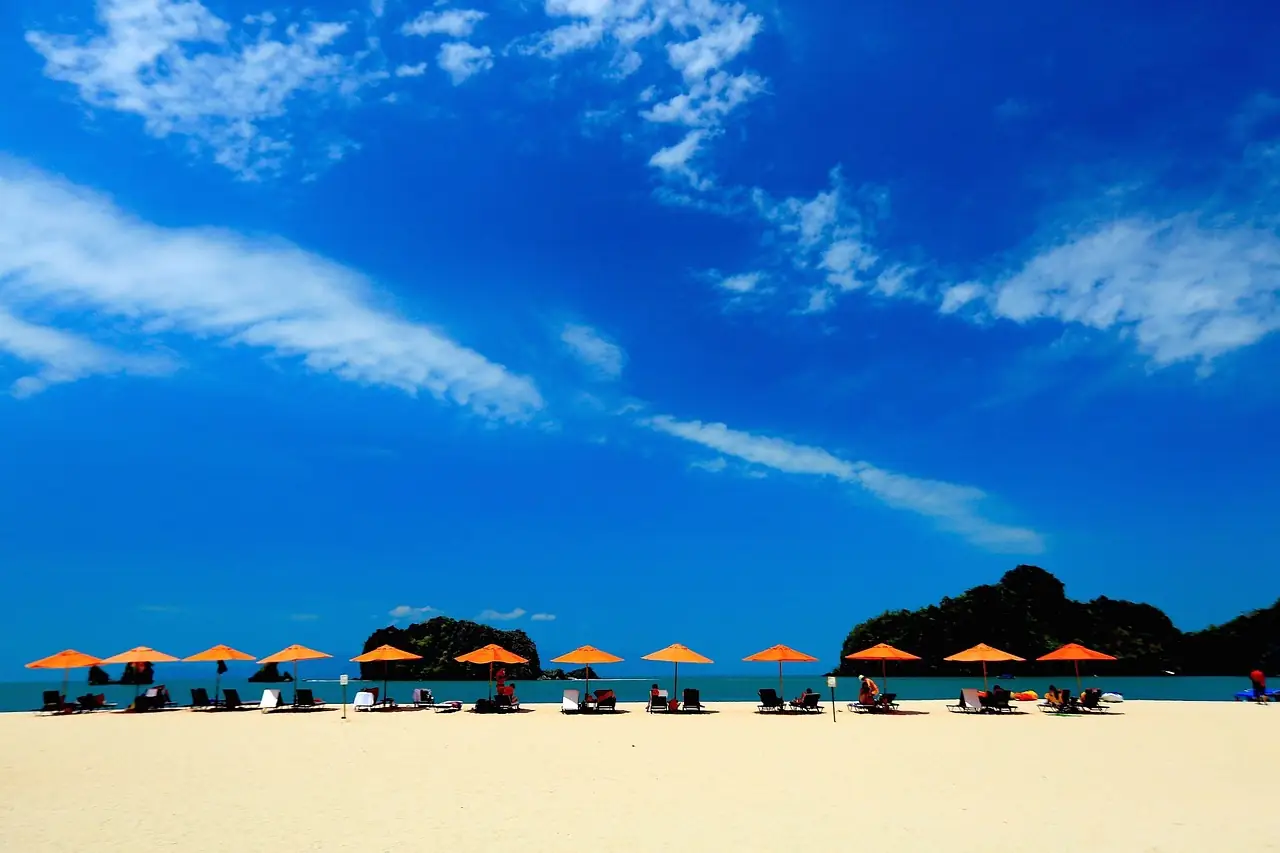
The trap: the Malaysian islands most nomads picture, Perhentian, Redang and Tioman, are on the east coast, and the northeast monsoon shuts them for the winter. Booking one for December means a closed resort and no ferry, not just a wet week.
Where to be next: your month-by-month route, $19
A route for your months with a leave-by date for each stop, a backup, and the seasonal traps on your path. Drafted from 11 years of weather data, every number checked against it, in your inbox within 48 hours. Not included: visas, insurance or bookings.
Are Perhentian, Redang and Tioman really closed from November to February?
Mostly, yes. Travel guides such as Wikivoyage's Perhentian page and its Redang page describe resorts, dive shops and scheduled boats closing for the northeast monsoon and reopening around March. Dates vary by operator and year, and Tioman is usually a little easier to reach than the other two. We hold no ferry or resort schedule, so treat "November to February" as the usual window and confirm with the resort and the boat operator before you pay anything.
The rain is why. In our 2015 to 2025 averages Perhentian gets 560 mm in November and 499 mm in December, with 24 and 19 rainy days. A rainy day here is a day with at least four millimetres, the tropical threshold we use across the site.
Where to be next month, by email
One email at the start of each month: where it's warm, dry and smoke-free next. We'll email you in early December to confirm, then once a month. Free, unsubscribe any time. Privacy
How wet is it, month by month?
Here are rain and rainy days for the three east coast islands and three alternatives, November to March.
Rain per month: millimetres (large) and rainy days (small)
| Month | ||||||
|---|---|---|---|---|---|---|
| Nov | 56024 d | 53524 d | 32621 d | 32721 d | 40226 d | 38325 d |
| Dec | 49919 d | 43618 d | 28217 d | 14610 d | 20515 d | 31419 d |
| Jan | 24112 d | 20310 d | 25512 d | 775 d | 14711 d | 22915 d |
| Feb | 1337 d | 1106 d | 1046 d | 463 d | 1219 d | 1269 d |
| Mar | 685 d | 564 d | 865 d | 897 d | 18914 d | 22416 d |
Averages 2015-2025 · Open-Meteo historical archive (CC BY 4.0), computed 2026-11-06 for this guide · a rainy day is 4 mm or more · How we measure
Read down each column: the three east coast islands are darkest in November and December and pale by March, while Langkawi turns pale from December.
By March the picture flips: Perhentian has 68 mm and 5 rainy days and Redang 56 mm and 4, while Penang has 189 mm and 14 and Kuala Lumpur 224 mm and 16. That is the reopening, and it is also why the west coast is the winter choice and the east coast the summer one.
Where should I go instead?
For a beach, Langkawi, from December. It is on the west coast, behind the mainland's mountains, and its rain drops by more than half between November (327 mm) and December (146 mm), then keeps falling to 77 mm in January and 46 mm in February. November is still wet there, so do not move the date forward.
For a working month, Penang or Kuala Lumpur. Penang has 205 mm and 15 rainy days in December, and falls to 147 mm in January. Kuala Lumpur is wetter, with 314 mm in December, but nothing in a city closes for the monsoon. If you need fast internet and good flights, it is the sensible base. See our Kuala Lumpur by month for temperatures and the rest of the year.
Where to be in Malaysia instead
Langkawi
Drier than anything on the east coast from December: 146 mm and 10 rainy days, then 77 mm in January and 46 mm in February. November is still wet there, 327 mm and 21 rainy days.
Suits: a beach month from December, if you can start late
Penang
205 mm and 15 rainy days in December, 147 mm in January. A city base with good food and cafes; the beach is not the point.
Suits: a working month with cafes, markets and short island trips
Kuala Lumpur
Wetter than Langkawi and Penang from December on: 314 mm in December and 229 mm in January. It is wet but does not close: the infrastructure for remote work is here.
Suits: a base with the best flights and wifi, for people who do not need a beach
Is the sea calmer on the west coast in winter?
On rain alone, yes: Langkawi's December rain is 146 mm, less than a third of Perhentian's. Sea state and wind are not in our data, so we cannot say how calm the water is on a given day. Check a marine forecast for the week you travel if you plan boat trips or island hopping.
What the numbers do show is that November is the wrong month for all six places: 326 to 560 mm, and 21 to 26 rainy days. If you land in Malaysia in November, the driest of the six is Tioman at 326 mm, barely different from Langkawi's 327 mm, and neither is a beach month.
What about air quality and heat?
Haze episodes are mostly a July to October story, so winter is the cleaner window; our Malaysia air quality guide has the monthly model for Kuala Lumpur, Penang and Langkawi.
What does a sensible winter 2026-27 look like?
A plan for someone who wants Malaysia this winter:
- November: not the islands. Base in Kuala Lumpur or Penang, accept the rain, or be elsewhere. Where to go in November has the dry alternatives.
- December: Langkawi, booked flexibly, or Penang for work.
- January and February: Langkawi at its driest. The east coast stays closed.
- March: the east coast islands reopen, and the Perhentian and Redang numbers drop to 68 and 56 mm. For a Thailand comparison in the same weeks, see Thailand in December.
The wider ranking for the month is in where is warm in December.
How do I protect a booking?
Do not pay a month upfront for an east coast island before the resort confirms in writing that it is open on your dates. Prefer refundable stays for the first week anywhere, and check ferries separately from accommodation, because boats stop first when the sea turns rough. Winter 2026-27 may differ from the average, and nothing here is a forecast.
How sure are these numbers?
Perhentian, Redang, Tioman, Langkawi and Penang are not yet destination pages on NomadWeather, so we computed their rain for this guide from the Open-Meteo historical archive for 2015 to 2025: the mean monthly total, and the mean number of days with at least four millimetres. Kuala Lumpur is computed the same way for a fair comparison, so its figures can differ from the stored ones on its destination page. Each point is one grid cell of about 10 km, so a small island may be wetter or drier than its cell. Any single year can differ from the average. We hold no wave, wind or ferry data.
Frequently asked questions
Are Perhentian, Redang and Tioman closed from November to February?
Most resorts, dive shops and the scheduled ferries are, because of the northeast monsoon, and they reopen around March. Dates vary by operator and year, and Tioman tends to stay easier to reach than the other two, so ask your resort before you book.
How much does it rain on the Malaysian east coast in December?
On our 2015 to 2025 averages Perhentian gets 499 mm and 19 rainy days in December, Redang 436 mm and 18, Tioman 282 mm and 17. November is wetter still on Perhentian (560 mm) and Redang (535 mm).
Is Langkawi a good alternative in December?
Yes, from December. Langkawi has 146 mm and 10 rainy days that month, against 327 mm and 21 rainy days in November. January (77 mm, 5 rainy days) and February (46 mm, 3) are drier still.
Is Penang or Langkawi better for a month in winter?
Langkawi has less rain: 146 mm in December against 205 mm in Penang, and 77 mm in January against 147 mm. Penang is the stronger base for working, with a city's cafes and food, and Langkawi is the stronger beach.
When do the east coast islands reopen?
Around March, when Perhentian has 68 mm and 5 rainy days and Redang 56 mm and 4. Some operators restart in late February; confirm with the resort and the ferry operator, because we hold no schedule data.
Do you have data on sea conditions or ferry cancellations?
No. Our data is rain, temperature and air quality by month. Rough seas, which are why boats stop, are not in it, so we use the rain figures only as evidence of how wet the monsoon is.
Not sure where yet? Pick your months and what to avoid, and get your 3 best places → Where should I go?
Weather data: Open-Meteo (CC BY 4.0), open-meteo.com; rain totals: CHIRPS (Climate Hazards Center, UC Santa Barbara). Processed by NomadWeather from stored copies of the data.